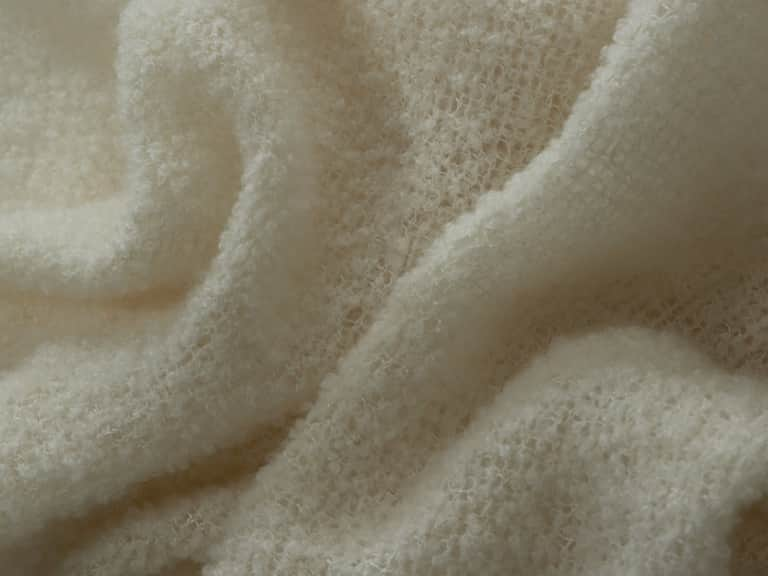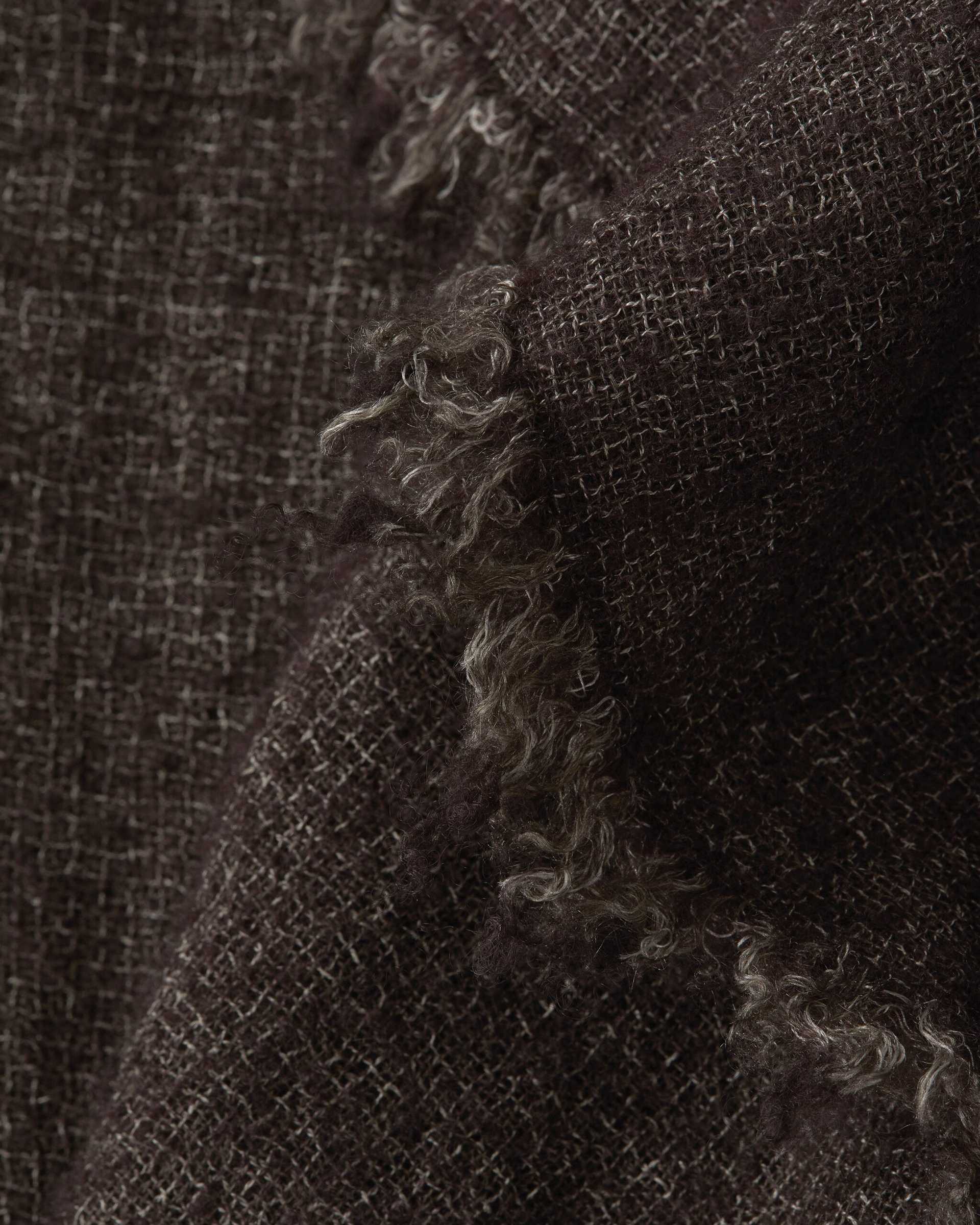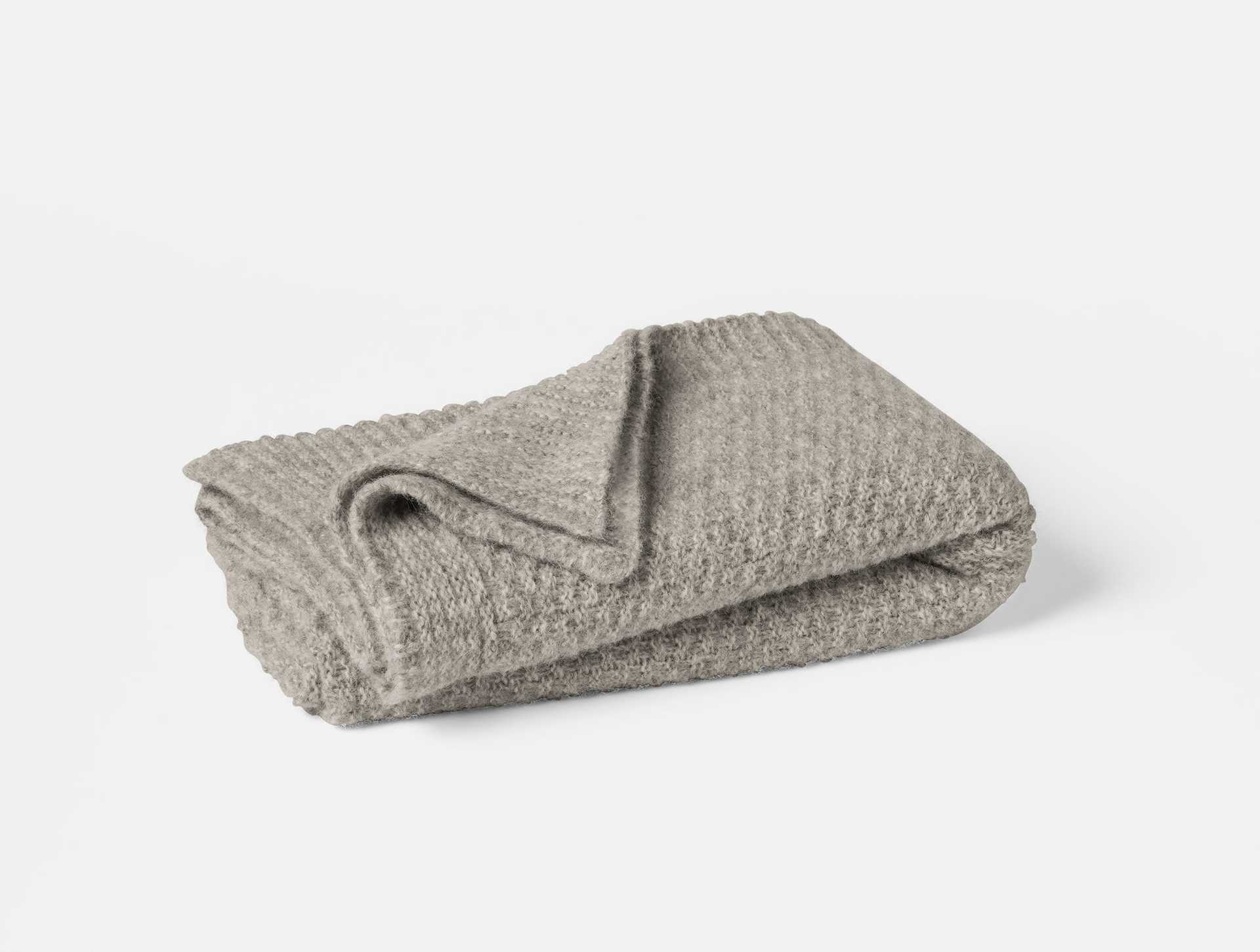
Cashmere, considered
What Makes Cashmere Bedding Feel Soft? A Guide to Fiber, Weave, and Blend
The quiet luxury of cashmere is often summed up in one word: soft. But the hand of a textile is not a simple property stamped onto a fiber. It emerges from the fineness of the fibers, the yarn made from them, the structure of the fabric, and the way the material is finished and cared for.
Published November 15, 2026
Touch a cashmere textile and the first impression can seem self-explanatory: a light, gentle surface that feels warm without feeling heavy. Yet “cashmere softness” is not a fixed standard, nor does the word cashmere guarantee the same sensation from one blanket or bedding fabric to another. Fiber quality matters, but so do yarn construction, weave, finishing, and the fibers blended with it.
That distinction is useful when comparing cashmere bedding, where a product may combine cashmere with cotton or silk, or use cashmere in a throw rather than in sheets or a duvet cover. Material percentages tell part of the story. The fabric’s structure and care requirements help complete it. A good comparison begins not with a promise of softness, but with a closer look at what the textile is made to do.
St Genève’s cotton-and-cashmere bedding offers a practical reference point for understanding how a blend can shape feel. Its Smir duvet cover is listed as 85% cotton and 15% cashmere, with a distinctive weave described as velvety and machine washable. The Smir pillow cases use the same 85/15 composition in a diagonal twill weave. Those details describe a different proposition from a fabric made entirely of cashmere: one in which cotton forms the larger share and cashmere contributes to the blend’s character.
Softness begins at the fiber
Cashmere comes from the fine undercoat of cashmere goats. Each fiber is a natural structure, and its dimensions influence how it feels when gathered into yarn and fabric. Finer fibers tend to bend more readily against the skin. That flexibility can produce a smoother, less prickly sensation than coarser fibers, though the final result also depends on how the fiber is processed and used.
Fineness is not the only consideration. Fiber length, uniformity, cleanliness, and the presence of coarser guard hairs can all affect the quality of the raw material and the comfort of the finished textile. Even among fibers commonly called cashmere, variation is expected. A label identifying the fiber does not, on its own, explain every quality difference or predict exactly how a finished bedding piece will feel.
In practical terms, the fiber is only the beginning. It must be prepared, spun into yarn, and made into a fabric. A fine fiber can contribute to a soft hand, but if the yarn is tightly twisted or the fabric is constructed for a crisp, durable surface, the result may feel quite different from a loose, plush knit. Conversely, a fabric may feel gentle because of its weave and finish even when cashmere is only one component.
There is also a difference between softness in the hand and comfort in use. A textile that feels exceptionally smooth when new may respond differently to warmth, friction, laundering, or repeated use. Bedding lies close to the body for long periods, so breathability, surface stability, and care demands matter alongside the first tactile impression.
From fiber to yarn: the hidden architecture
Yarn gives loose fibers their first organized form. Spinning controls how fibers are aligned and held together, and the resulting yarn can be fine or substantial, smooth or slightly textured. Twist is part of that balance. A tighter twist generally helps hold fibers together and can support durability, while a more relaxed yarn may create a softer, loftier impression. Neither approach is automatically superior; the intended use matters.
For bedding, a stable yarn can help a fabric cope with regular contact and movement. A softer, less compact yarn may feel inviting but can be more vulnerable to pilling or distortion, depending on its composition and construction. These outcomes cannot be inferred from the fiber name alone. A useful product description therefore includes more than a headline claim: composition, weave or knit, finishing, and care instructions all provide clues.
Cashmere is often discussed in connection with warmth and softness, but those qualities are affected by the arrangement of the yarns as much as by the fiber. A textile designed to drape over a bed may prioritize fluidity. A pillow case must tolerate nightly contact and regular laundering. A throw can be lighter, more decorative, and less exposed to the repeated washing expected of bed linens. The same fiber can serve these different roles in very different ways.
Weave changes the surface
Weave describes how lengthwise and crosswise yarns interlace. It affects texture, drape, stability, and the way light falls across a fabric. Twill, for example, produces a diagonal surface pattern. A twill can feel smooth while still having visible texture; its specific hand depends on yarn, density, finishing, and fiber composition. The word “twill” is a useful construction clue, not a guarantee of a particular level of softness.
St Genève’s Smir pillow cases are described as a cotton-and-cashmere blend in a diagonal twill weave. That detail helps explain why a shopper might encounter both a defined surface and a soft feel. The duvet cover is also described as having a distinctive weave and a velvety surface, with mingled tones. Together, the product descriptions show how weave and finish can be part of a textile’s identity, rather than incidental details beneath its fiber label.
Knitted fabrics offer another comparison. Instead of interlacing yarns in a woven grid, knitting forms connected loops. This construction can create stretch, loft, and a more openly textured hand. A knit throw may feel soft and yielding, but it behaves differently from a woven duvet cover: it can stretch, drape differently, and need different care. Comparing the two simply by cashmere content would overlook the structure that gives each its character.
Fabric density matters, too. A closer construction may feel compact and substantial, while a more open structure may feel airy and flexible. Density can influence warmth and resilience, but it does not translate into a universal softness score. The weight, thickness, and surface finish of a textile shape the experience of touch in combination.
What a blend can—and cannot—tell you
Blending fibers brings different qualities into one textile. Cotton is widely used in bedding for its familiar feel and practical qualities. Cashmere can add a distinctive softness and warmth. In an 85% cotton, 15% cashmere blend, cotton is the dominant fiber by proportion; the cashmere is a smaller but meaningful part of the composition. The blend should be understood as a whole, not as pure cashmere in disguise.
A percentage is a valuable fact, but not a tactile verdict. Two textiles with the same fiber proportions can feel different because they use different yarns, weaves, densities, finishes, or manufacturing methods. A blend may also be designed to balance comfort and everyday practicality, rather than maximize the sensation associated with one fiber in isolation.
Blends can make a textile’s feel more complex. Cotton may contribute a familiar, grounded hand, while cashmere may soften the overall surface. But the result depends on how the fibers are integrated. A cotton-and-cashmere fabric is not necessarily softer than every cotton textile, and a higher cashmere percentage does not automatically make a product the best choice for every sleeper.
The same principle applies to cashmere blended with silk. The Mir Throw is listed as 80% cashmere and 20% silk, in a lightweight gauze weighing 110 grams per square metre. The product description positions it as a soft, light layer for a bed or sofa. That composition and construction differ from cotton-and-cashmere bedding: the piece is a throw, not a duvet cover or pillow case, and its gauze structure gives it a different role and feel.
The Tiub Throw offers another example: 70% cashmere and 30% silk in a double-faced fabric, with a solid-colour side and a melange reverse. Its weight and construction signal an extra-light layer rather than a conventional bedding fabric. These examples are useful for comparing how fiber blends and structures vary, but they should not be treated as direct substitutes for cotton-and-cashmere sheets or covers.
Softness is personal—and changes with use
People do not experience fabric in identical ways. Some prefer a smooth, cool surface; others find a little texture more comforting. A warm, plush hand may appeal in a winter bedroom but feel too substantial in a heated room. Skin sensitivity, sleeping temperature, and the way bedding is layered all influence what “soft” means in practice.
There is also a useful distinction between softness and smoothness. A surface can feel smooth because its yarns and weave lie evenly, yet not have the cushioned softness associated with a loftier textile. A knitted or brushed fabric may feel more yielding, while a fine woven fabric can feel sleek and close. Descriptions such as velvety, airy, gauzy, or textured point to different sensory qualities; none alone ranks a product as better.
New fabric is not always a reliable forecast of how it will feel after care. Washing, drying, friction, and storage can influence texture and shape. The Smir bedding is described as machine washable, a practical detail for regular-use linens. That instruction should be followed as provided for the product, rather than generalized to every cashmere textile. Many cashmere throws, for instance, call for more delicate care. The correct method depends on the construction and the maker’s instructions.
Over time, surface fibers may shift or form small pills, especially where friction is frequent. Pilling is not a simple measure of whether cashmere is genuine or whether a textile is soft. It can arise from loose fibers working to the surface and gathering together. Gentle handling and appropriate care can help maintain a fabric, but no natural-fiber textile is immune to wear.
How to compare cashmere bedding thoughtfully
When evaluating a cashmere bedding textile, look for a description that helps you understand both its composition and construction. The aim is not to reduce a sensory choice to a checklist. It is to make the choice more informed, especially when products use broad language such as “luxury,” “soft,” or “cashmere feel.”
- Read the full fiber composition. Note whether the item is pure cashmere or a blend, and identify which fiber makes up the larger share.
- Look for fabric structure. A twill weave, gauze, knit, or brushed finish suggests a particular construction, though the details still depend on yarn and density.
- Consider the intended use. A throw, pillow case, and duvet cover have different jobs and exposure to friction, body heat, and laundering.
- Check care instructions before buying. A textile that requires specialist care may suit occasional use better than bedding that needs frequent washing.
- Compare weight and drape where available. Weight can help describe the fabric’s substance, but it does not by itself determine softness or warmth.
- Pay attention to your own preferences. A smooth hand, a soft nap, lightness, and warmth are related but distinct qualities.
Product descriptions are most useful when read together. For example, a composition of 85% cotton and 15% cashmere, a diagonal twill, and machine-washable care presents a clearer picture than the word “cashmere” alone. It describes a cotton-led textile with a named structure and a stated care approach. The description does not settle whether it will be your softest bedding; it gives you grounds for a more meaningful comparison.
A note on warmth, breathability, and comfort
Softness often gets used as shorthand for overall comfort, but bedding has several jobs. It touches the skin, holds warmth, manages moisture, and moves with the body. A textile’s performance depends on the fiber blend and construction, as well as the room and the sleeper. A light layer may be comfortable in a warmer environment, while a more substantial covering may suit a cooler one.
Cashmere’s association with warmth does not mean every cashmere fabric is heavy. The Mir Throw’s stated weight of 110 grams per square metre and the Tiub Throw’s fine, double-faced construction illustrate how cashmere blends can be made into lightweight layers. A cotton-and-cashmere duvet cover has a different function: it is part of a bedding system and is used with a comforter or other covering. Comparing the two requires attention to purpose as well as material.
For sleep comfort, consider the whole bed rather than one textile in isolation. Sheets, covers, blankets, and the room’s temperature interact. Someone who sleeps warm may value a lighter hand and easy layering; someone who prefers more insulation may prioritize a different weight. There is no universal cashmere formula for a comfortable night.
The lasting value of a careful comparison
Cashmere has a deserved reputation for delicacy and warmth, but the fiber’s reputation can obscure the choices that shape a finished textile. Fineness influences how fibers feel. Spinning organizes them into yarn. Weave or knit determines how those yarns meet. Blends introduce further qualities, and finishing and care influence what happens over time.
That is why cashmere bedding softness cannot be judged by a label or percentage alone. St Genève’s cotton-and-cashmere Smir bedding demonstrates the point: its 85/15 blend, diagonal twill pillow cases, distinctive duvet-cover weave, and machine-washable care instructions describe a textile with its own character. It is not equivalent to pure cashmere, nor should it be assessed as though composition were the only factor.
In the end, the most useful question is not simply whether a bedding item is soft. It is what kind of softness it offers, how the fabric is built, how it is expected to be used, and whether its care fits your life. Read the fiber content. Notice the weave. Consider the weight and finish. Then bring the final measure back to the most important one: how the fabric feels to you.
Quick guide: the factors behind the feel
- Fiber fineness: influences how readily fibers bend against the skin.
- Yarn construction: twist and structure affect stability, loft, and surface feel.
- Weave or knit: shapes texture, drape, stretch, density, and the textile’s use.
- Fiber blend: composition describes materials, but percentages alone cannot predict the hand.
- Finishing and care: affect the surface and how well the textile keeps its character over time.
- Personal preference: determines whether smooth, plush, light, or textured feels most comfortable.